
Building muscle without a gym is possible when you follow the right plan and stay consistent. Many people think they need rows of machines and heavy barbells to get stronger, but dumbbells can train every major muscle group from your shoulders down to your legs. With the right movements, one pair of weights can help you work your chest, back, arms, core, and lower body in a single routine.
A structured weekly dumbbell workout plan gives your body a clear path to follow, much like a map helps you reach your destination faster. By training each muscle group with purpose throughout the week, you build strength steadily and support muscle growth over time. This guide gives you a simple plan to help you train smarter, stay organized, and get full-body results with dumbbells alone. If you are looking for high-quality dumbbells to begin your fitness routine, visit SwiftWeight.com to find the right equipment for your workouts.
Why a Weekly Dumbbell Workout Plan Works for Building Strength
A weekly dumbbell workout plan helps build strength because muscles grow better when trained on a regular schedule. Structured weekly training gives each muscle group the right amount of work while allowing enough time for recovery between sessions. This balance is important because muscles do not grow during exercise. They grow when your body repairs itself after training. Following a planned routine also keeps your workouts organized, so you train with purpose instead of guessing what to do each day.
Dumbbells are effective because they support progressive overload, which means slowly increasing the challenge as your body gets stronger. You can do this by raising the weight, adding more repetitions, or improving movement control over time. Dumbbells also give you the freedom to train almost anywhere, whether at home or in the gym. Their flexibility makes it easier to stay consistent, and consistency is what turns effort into real muscle and strength gains.
What You Need Before Starting Your Dumbbell Workout Plan
Before you begin any dumbbell workout plan, you need the right setup to train safely and get the best results. Starting without preparation is like building a house without a foundation. A few simple steps before your first workout can help you avoid injury, improve performance, and make each exercise more effective.
Choose the Right Dumbbell Weight
Choosing the correct dumbbell weight helps you train effectively while keeping control of your movements. Beginners should start with lighter weights that feel challenging in the last few reps but still allow proper form. Intermediate users can use heavier dumbbells for more resistance while staying comfortable and controlled.
If the weight feels too easy, your muscles will not be challenged enough to grow. If it feels too heavy, your form may break and increase injury risk. The right weight should challenge you without forcing you to struggle through the movement.
Warm Up Before Every Session
Warming up before exercise helps prepare your body and lowers the risk of injury. It increases blood flow, loosens tight muscles, and gets your joints ready for movement. Even a short warm-up can improve your performance during training.
Good warm-up exercises include jumping jacks, arm circles, bodyweight squats, and high knees. Spending just five minutes warming up can help your workout feel smoother and safer.
Focus on Proper Form
Proper form is more important than lifting heavy because it makes sure the correct muscles are doing the work. Good technique helps build strength faster and keeps your body balanced during each exercise.
Bad form can place stress on your joints and lead to injury over time. Staying controlled with each rep helps protect your body and improves muscle targeting.
Weekly Dumbbell Workout Plan for Full-Body Strength and Muscle Gain
A structured weekly dumbbell workout plan helps you train every major muscle group while giving your body enough time to recover between sessions. This balance supports strength gains, muscle growth, and steady progress throughout the week. Each day focuses on a different area so your workouts stay organized and effective.
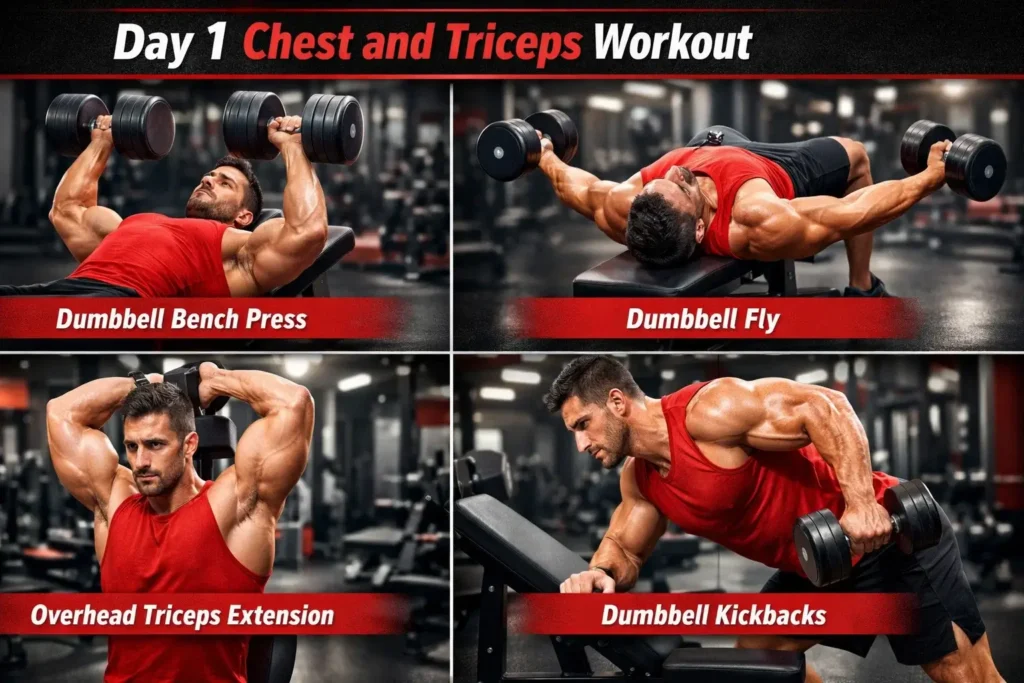
Day 1 – Chest and Triceps Workout
This workout targets your upper body pushing muscles and helps build chest size and arm strength. These exercises improve pressing power and support better upper-body balance.
Exercises:
- Dumbbell bench press
- Dumbbell fly
- Overhead triceps extension
- Dumbbell kickbacks
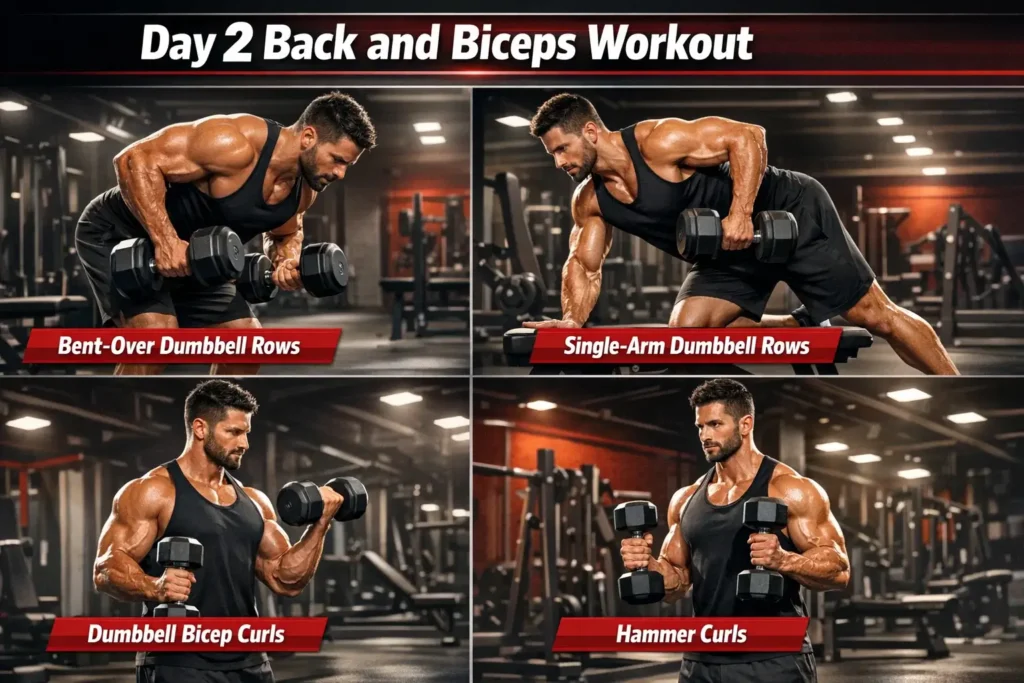
Day 2 – Back and Biceps Workout
This session trains your pulling muscles and helps improve posture, back strength, and arm definition. Strong back muscles also support better lifting form in other workouts.
Exercises:
- Bent-over dumbbell rows
- Single-arm dumbbell rows
- Dumbbell bicep curls
- Hammer curls
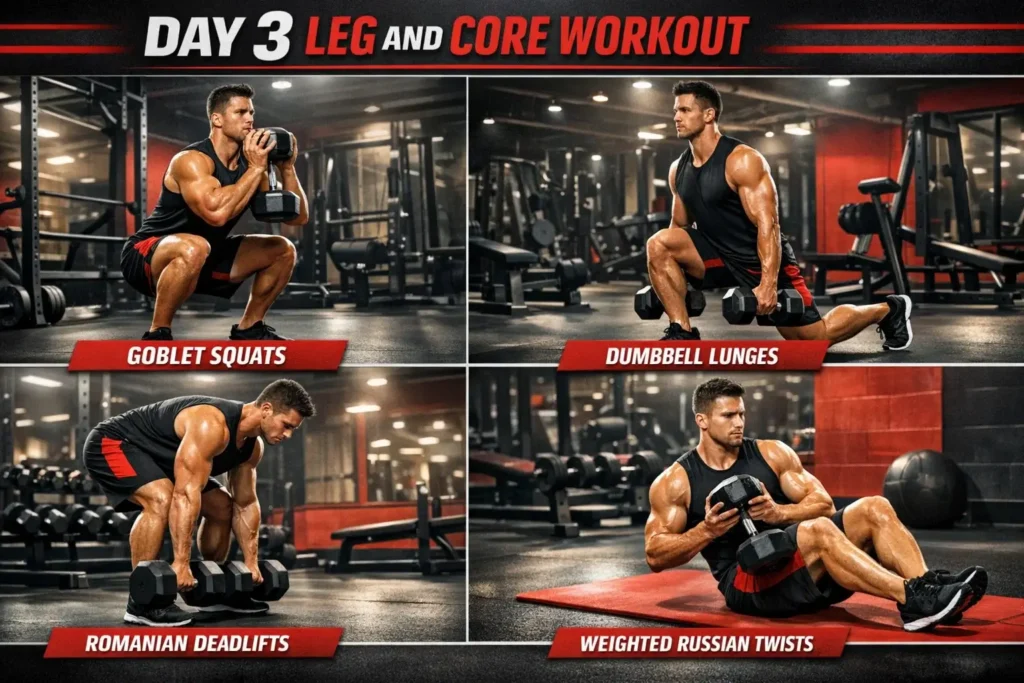
Day 3 – Leg and Core Workout
Leg and core training builds lower-body power and improves balance, stability, and movement control. A strong lower body supports nearly every daily activity and athletic movement.
Exercises:
- Goblet squats
- Dumbbell lunges
- Romanian deadlifts
- Weighted Russian twists
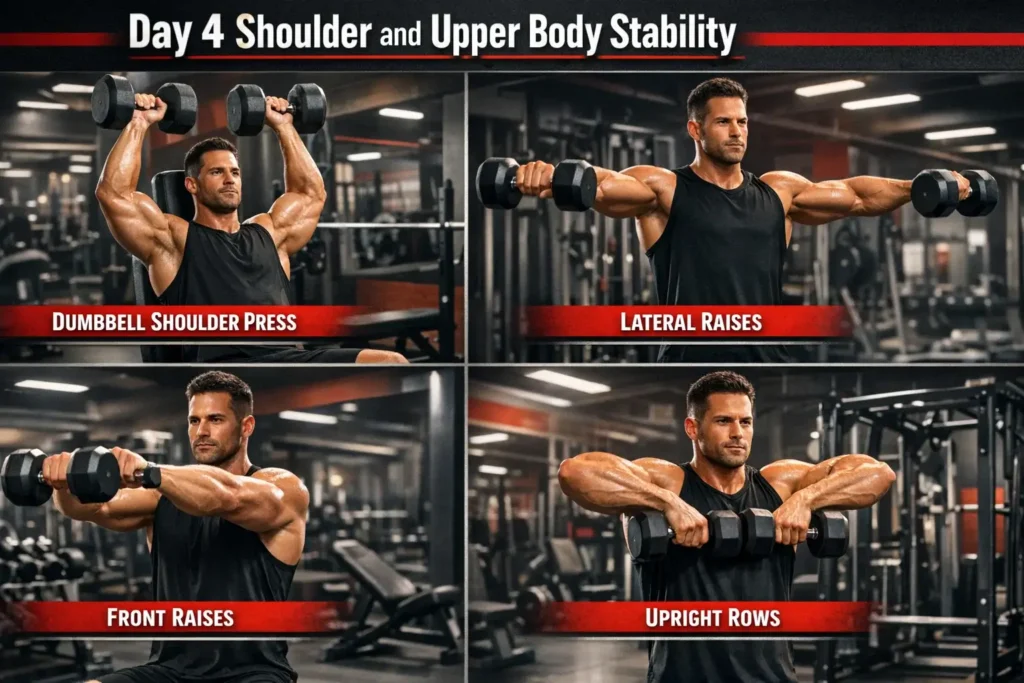
Day 4 – Shoulder and Upper Body Stability
This workout strengthens your shoulders and improves upper-body control. It also helps create balanced shoulder development and better posture.
Exercises:
- Dumbbell shoulder press
- Lateral raises
- Front raises
- Upright rows
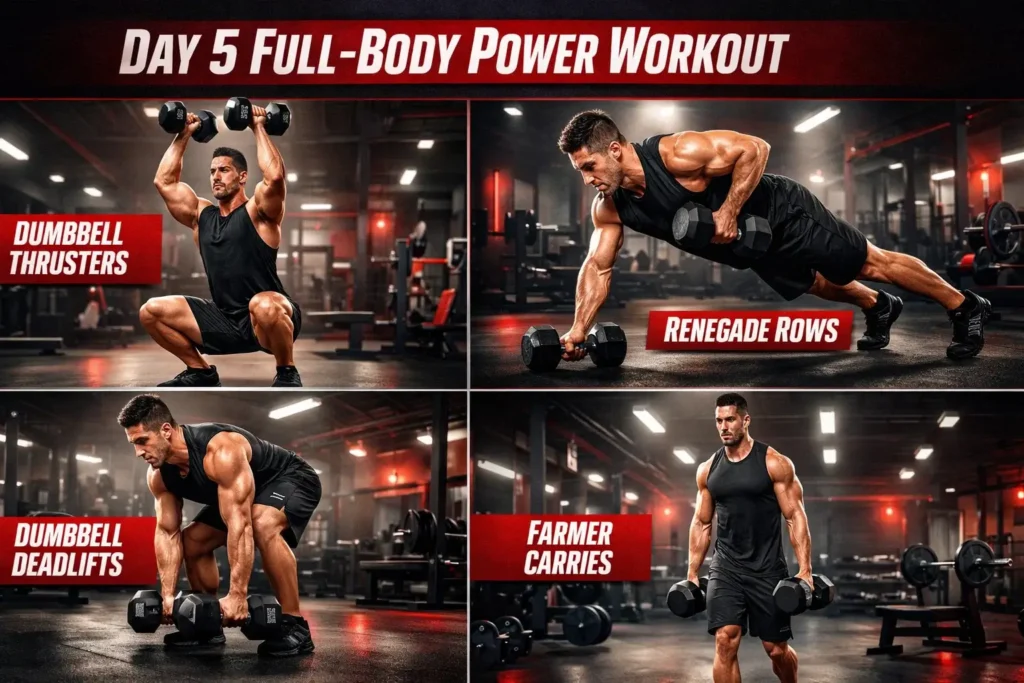
Day 5 – Full-Body Power Workout
This day combines explosive and strength-based movements to train the whole body. These exercises improve endurance, coordination, and total-body power.
Exercises:
- Dumbbell thrusters
- Renegade rows
- Dumbbell deadlifts
- Farmer carries
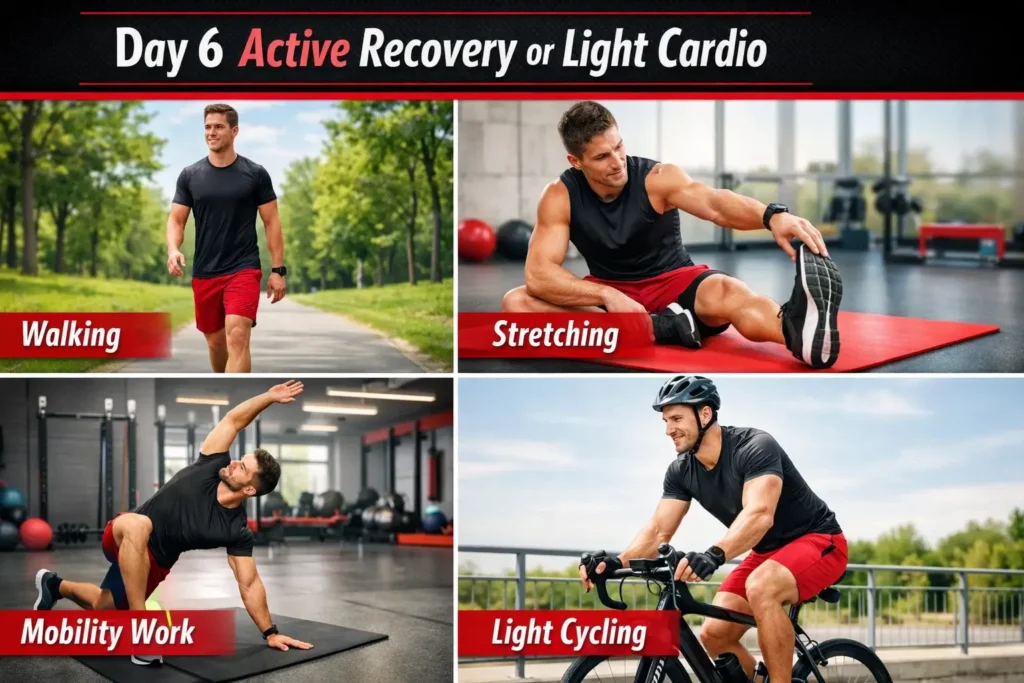
Day 6 – Active Recovery or Light Cardio
Recovery days help your muscles heal while keeping your body moving. Light activity improves blood flow, reduces soreness, and prepares you for the next workout week.
Recommended activities:
- Walking
- Stretching
- Mobility work
- Light cycling
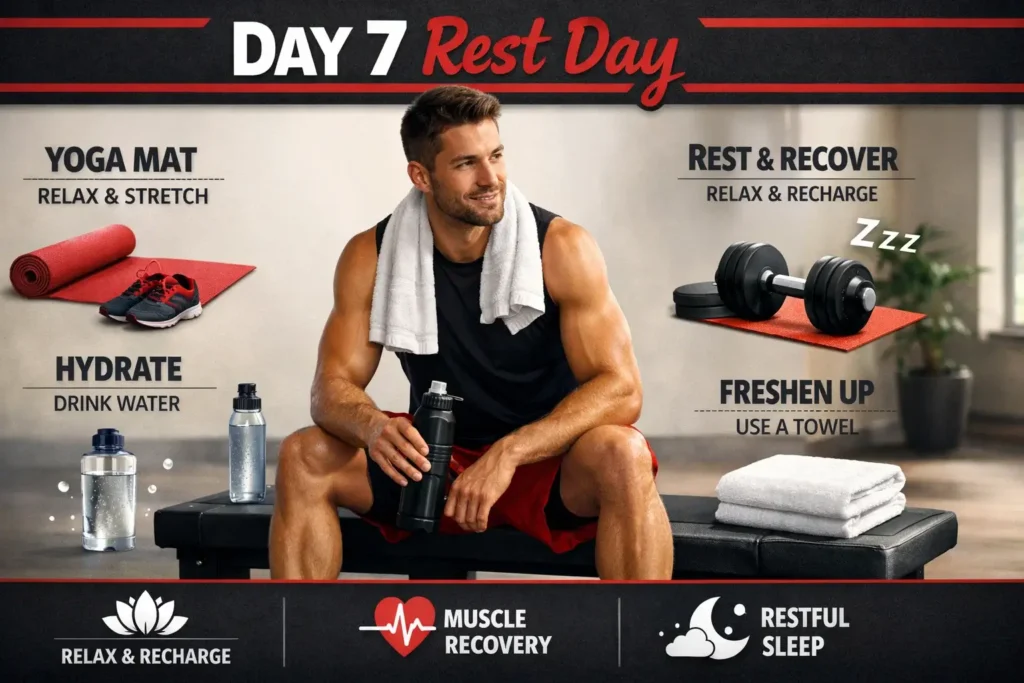
Day 7 – Rest Day
Rest days are when your muscles repair and grow stronger after a week of training. Without proper rest, your body cannot recover fully, and progress may slow down. Taking one full day off helps your muscles rebuild and prepares you for another strong training week.
Tips to Get Better Results From Your Dumbbell Training
Getting better results from dumbbell training depends on how well you train, recover, and stay consistent. Simple habits can help you build muscle faster and make each workout more effective over time.
Increase Weight Gradually
Increasing weight over time helps your muscles keep getting stronger. This is called progressive overload, and it pushes your body to adapt by building more muscle and strength.
Track Your Reps and Sets
Tracking your reps and sets helps you monitor progress and stay organized. It shows when you are improving and helps you know when to make your workouts harder.
Eat Enough Protein for Muscle Recovery
Protein helps repair muscle tissue after exercise and supports muscle growth. Eating enough protein each day helps your body recover properly and build strength faster.
Conclusion
A weekly dumbbell workout plan can help you build strength and gain muscle by training each part of your body with structure and consistency. With the right exercises, proper form, and steady effort, dumbbells can deliver full-body results even without a gym.
Stay consistent, increase your weights over time, and give your body enough rest to recover. When combined with good nutrition and patience, this routine can help you grow stronger and build muscle week after week.
Frequently Asked Questions
Can I build muscle using only dumbbells?
Yes, you can build muscle using only dumbbells if you follow a structured workout plan and train consistently. Dumbbells allow you to target every major muscle group and support muscle growth through progressive overload.
How many days a week should I do dumbbell workouts?
Most people see good results by training 4 to 5 days per week with dumbbells. This gives enough workout volume for muscle growth while allowing proper recovery between sessions.
What weight dumbbells should beginners start with?
Beginners should start with a weight they can lift with control for 10 to 12 reps while still feeling challenged near the end of the set. For many beginners, this ranges between 5 to 15 pounds depending on the exercise.
How long does it take to see results from dumbbell training?
Many people start noticing strength and muscle changes within 4 to 8 weeks when following a proper workout routine, eating well, and staying consistent.
Should I do cardio with my dumbbell workout plan?
Yes, adding light cardio can support heart health, endurance, and recovery. However, too much cardio may affect muscle gain if it limits recovery or calorie intake.